
You do not need to clip a loading dock or concrete post to realize your mirrors have limits.
Most box truck damage happens during slow-speed reversing. A loading dock. A concrete post. A car tucked just outside your view. The repairs rarely make headlines, but they can ruin a workday.
That’s why choosing the best backup camera for box truck use isn’t about buying the most expensive system. It is about seeing what you couldn’t see before. Once that blind spot disappears, backing up feels a lot less stressful.
Before you compare brands or monitor sizes, think about how your truck spends its day. A truck making neighborhood deliveries has different needs than one reversing into busy warehouse docks all afternoon. The right camera depends on the job, not just the spec sheet.
1. Coverage Area
It is easy to get distracted by resolution numbers and screen sizes. Most drivers do.
Instead, picture yesterday’s route. Where did you reverse the most? Was it a tight alley? A crowded parking lot? A warehouse with people walking behind the truck?
Those answers matter more than any marketing brochure.
If your truck spends every day squeezing into loading bays, wider coverage should be high on your list. If multiple people drive the same vehicle, you will probably want something simple enough that nobody has to think twice before using it.
Ask yourself a few quick questions.
Do you back into loading docks every day? Do you drive before sunrise or after dark? Is quick installation important? Would side cameras make lane changes easier?
Once you answer those, the shortlist gets much smaller.
2. Connectivity Type (Wireless or Wired)
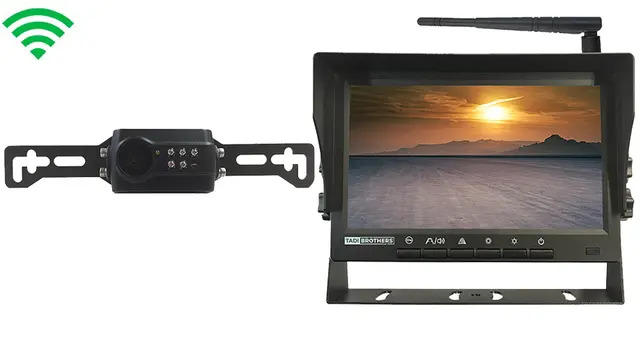
People ask this question first, but there isn’t one right answer.
A wireless backup camera for box truck applications makes sense when downtime matters. Modern digital wireless systems are far more stable than older versions, and installation is usually quicker because there are fewer cables to run through the truck.
A wired system still has plenty of fans. Once it’s installed, the connection stays consistent, even on trucks that spend long days on the road.
Think less about which technology is “better” and more about what fits your truck.
If you are updating an older delivery vehicle, wireless is often the easier path. If you are outfitting a new truck that will stay in service for years, wiring everything once can be a smart long-term choice.
3. Number of Cameras / Viewing Angles
Most drivers focus on what is directly behind the truck. That is usually your biggest blind spot.
But backing accidents don’t only happen there. Side scrapes are common around loading docks. Cyclists, pedestrians, and small vehicles can disappear beside the cargo box. Tight turns leave very little room between the truck and nearby obstacles.
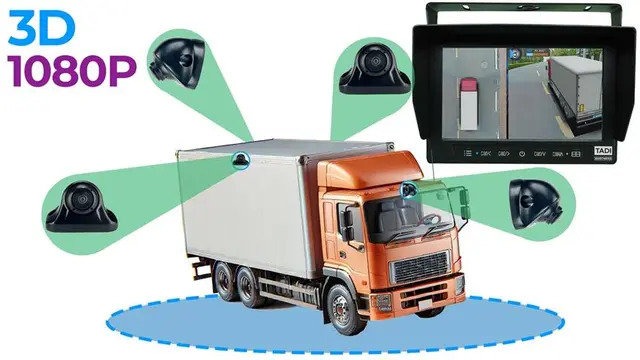
That is why many drivers eventually move beyond a single rear camera. A system with side cameras or split-screen viewing gives you a much better sense of what’s happening around the truck instead of behind it alone. It doesn’t replace your mirrors. It fills the gaps they leave behind.
Sometimes that extra angle is all it takes to avoid an expensive mistake.
4. Weather and Night-Vision Performance
Rain doesn’t cancel deliveries. Neither does darkness.
Your camera still needs to work when the weather turns bad.
A bright afternoon doesn’t tell you much about how a system performs at six in the morning during heavy rain. That’s where build quality starts to matter.
Look for features that make a difference every day, not just on paper.
Look for:
- Good night vision for dark loading areas
- A waterproof housing built for commercial use
- Clear images with minimal glare
- Equipment designed to handle vibration and rough roads
These aren’t luxury features. They are the reason the camera still works after thousands of miles instead of a single season.
5. Recording Capability (DVR)
A live camera helps you avoid hitting something.
A DVR helps explain what happened if something still goes wrong.
They are solving two different problems.
Imagine another vehicle claiming your truck and causing damage while leaving a delivery yard. Without recorded footage, you are relying on memory. With a DVR, you can review exactly what happened.
Not every driver needs DVR recording. But fleets, shared vehicles, and commercial operators often benefit from having footage when questions come up later.
For fleets, shared vehicles, or trucks that spend long hours on the road, it is a feature that often proves its value long after the shift ends.
It’s one of those things people rarely ask for twice.
6. Build Durability
The cheapest option often looks tempting. Sometimes it is the right choice. Sometimes it ends up costing more because you’re replacing it a year later.
A backup camera works every day. It deals with rain, dust, vibration, and constant reversing. Buying only on price often means giving up the features you’ll appreciate most after months of daily use.
That’s where TadiBrothers stands out.
TadiBrothers offers systems for different commercial vehicles instead of expecting one setup to fit every truck. Whether you need a simple rear-view setup or a complete multi-camera system with DVR recording, side cameras, long-range digital wireless transmission, or split-screen monitors, you can choose what fits your truck instead of paying for features you’ll never use.
Their Backup Camera Systems are designed for vehicles that spend long days on the road, not just weekend driving.
And that is an important difference.
A Better View Changes More Than Parking
A backup camera won’t make a loading dock any wider. It won’t move the concrete post someone forgot to paint yellow. What it will do is remove a lot of the guesswork. That is really what the best backup camera for box truck drivers should offer. A clearer view. More confidence. Fewer close calls.
After a while, you stop thinking about the camera altogether. You simply notice you are backing into places that used to make you pause. And that is probably the best sign you chose the right system.
FAQs
1. Is a wireless backup camera reliable for a box truck?
Yes. Modern digital wireless systems provide stable performance when they’re designed for commercial vehicles and the appropriate transmission range.
2. Do I really need side cameras?
If you regularly reverse into loading docks, drive in cities, or change lanes in heavy traffic, side cameras can significantly improve visibility.
3. Is DVR recording worth paying for?
For fleets and trucks driven by multiple people, recorded footage can be valuable if an incident or insurance claim needs reviewing.
4. What monitor size is best?
Most commercial drivers find a 7-inch monitor offers a comfortable balance between visibility and dashboard space.