
To back up a trailer safely, slow down, use small steering inputs, and maintain clear rear visibility at all times. That single idea solves most problems drivers face when reversing with a trailer. Upgrading to a reliable camera system from TadiBrothers improves rear visibility and reduces guesswork during tight maneuvers.
Backing up feels difficult because trailers move opposite to steering direction. Blind spots increase stress. Pressure from waiting drivers adds mistakes. These factors combine quickly, especially in campsites, fuel stations, and narrow driveways.
This guide explains how to back up a trailer using eight practical steps. Each step focuses on control, visibility, and recovery. The goal is not speed. The goal is consistent, confident results in real conditions.
Quick Answer: How to Back Up a Trailer Correctly
Backing up a trailer works best when these basics are followed:
- Start with a wide, straight setup
- Use the bottom-of-the-wheel steering method
- Make small steering corrections
- Move slowly and pause often
- Reset early when alignment feels wrong
- Use mirrors and a backup camera together
This approach reduces errors and builds confidence fast.
Watch how you can install: Wireless Backup Camera System | Easy Step-by-Step Tutorial by TadiBrothers
Upgrade Your RV with HD 1080P Backup Cameras – Ultimate Installation Guide!
Why Backing Up a Trailer Feels So Unnatural
Trailers pivot at the hitch point. This causes delayed reaction to steering inputs. Turn too much, and the trailer swings sharply. Correct too late, and jackknifing starts.
Mirrors help, but they leave blind zones. Depth perception drops at night or in rain. Guessing replaces judgment.
That is why many drivers choose backup camera systems from TadiBrothers. Clear visibility reduces hesitation and improves decision timing. When obstacles are visible early, corrections stay small and controlled.
Step 1: Prepare the Space Before Reversing
Every successful reverse begins before shifting into gear.
Walk behind the trailer. Look for posts, rocks, curbs, slopes, toys, pets, and people. This prevents surprises once movement begins.
Set the vehicle at a wide angle. A straighter approach means less steering later.
Pre-reverse checklist:
- Clear the area behind the trailer
- Choose the widest entry path
- Remove distractions
- Take one calm pause before moving
Preparation eliminates rushed decisions.
Step 2: Use the Bottom-of-the-Wheel Steering Method
This technique simplifies learning how to back up a trailer.
Place one hand at the bottom of the steering wheel. Move the hand left, and the trailer moves left. Move it right, and the trailer follows right.
This works because hand motion matches trailer direction. Mental reversal disappears.
Micro-tip:
Turn the wheel less than expected. Wait two seconds before adjusting again.
Step 3: Make Small Corrections and Pause Often
Oversteering causes most backing errors.
Turn the wheel slightly. Pause. Watch the trailer respond. Adjust again if needed.
Trailers react slowly, then sharply. Waiting allows alignment to settle before correction.
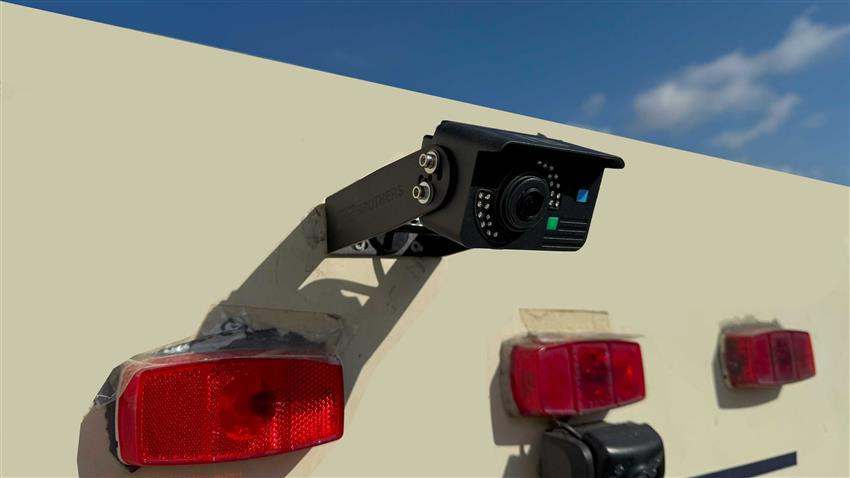
Good visibility makes this easier. A license plate backup camera shows rear movement early. Early feedback prevents panic steering. Clear rear visibility changes how quickly drivers react during tight maneuvers.
A trailer backup camera system shows rear movement early. Early feedback prevents panic steering.Small moves create smooth results.
Step 4: Combine Mirrors with Camera Visibility
Mirrors show trailer edges. Cameras reveal blind zones and depth.
Side mirrors track alignment. The camera confirms clearance behind the trailer.
Modern backup camera systems that offer wide viewing angles and stable signals. These features matter during tight campsite turns and uneven terrain.
Micro-tip:
Adjust mirrors so trailer tires remain visible at all times.
Step 5: Practice Straight-Line Reversing First
Before turning, control must come first.
Practice reversing straight in an empty lot. Use cones, bottles, or painted lines. Reverse ten feet. Stop. Reset.
Repeat until the trailer stays centered without correction.
Why this matters:
- Builds muscle memory
- Teaches steering response timing
- Reduces stress during real reverses
Straight-line practice accelerates learning.
Step 6: Reset Early to Prevent Jackknifing
Pulling forward is not failure. It is smart control.
If the trailer angle feels wrong, stop. Pull forward. Straighten. Try again.
Waiting too long increases damage risk. Early resets maintain safety.
Backup cameras make reset timing easier. Clear rear views show alignment drift early. Many drivers rely on TadiBrothers backup camera systems for this reason.
Control beats pride every time.
Step 7: Use a Spotter with Simple Signals
Spotters help when communication stays clean.
Use one spotter only. Agree on hand signals before starting. Avoid shouted directions.
The driver focuses on mirrors and camera views. The spotter watches obstacles and clearance.
If the spotter disappears from view, stop immediately.
Clear roles prevent confusion.
Step 8: Move Slowly and Ignore Pressure
Speed multiplies mistakes. Slow movement creates time.
External pressure from waiting vehicles should be ignored. Safety comes first.
Reliable visibility tools support slow backing. Night vision, wide angles, and stable signals matter most here.
Drivers installing trailer backup cameras often report calmer reverses because uncertainty disappears.
Confidence grows through control.
Common Backing Mistakes and How to Fix Them
Mistakes happen. Recovery matters more.
- Trailer turning too fast: Reduce steering input and pause longer
- Loss of alignment: Pull forward early and reset
- Mirror confusion: Focus on one mirror at a time
- Panic steering: Stop completely before correcting
Knowing how to recover prevents irreparable damage.
Why Quality Camera Systems Matter
Basic cameras show images. Towing-specific systems deliver control.
Vibration resistance, signal stability, wide views, and low-light clarity matter during reversing. These features support safer decisions in real environments.
Drivers selecting backup camera systems from TadiBrothers often prioritize reliability over novelty. That choice pays off during night arrivals, rain, and tight campsites.
Visibility changes behavior.
Key Takeaways
- Preparation prevents errors
- Small steering inputs maintain control
- Cameras reduce guesswork
- Early resets prevent damage
- Practice builds confidence
Learning how to back up a trailer depends less on strength or experience and more on visibility, patience, and smart technique. The next reverse presents a simple choice. React to uncertainty, or guide the trailer with calm control and clear vision?
Frequently Asked Questions
What direction should the wheel turn when backing up a trailer?
Turn the wheel toward the direction the trailer should move using the bottom-hand method.
What causes jackknifing?
Large steering inputs combined with delayed correction cause sharp trailer angles.
Do backup cameras really help?
Yes. Cameras reduce blind spots and improve depth judgment during slow movement.
Is this technique beginner-friendly?
Yes. Beginners often perform well because habits have not formed yet.