
Your mirrors lie to you. Not on purpose. Structurally. There are zones alongside and behind your car that no mirror, no matter how perfectly adjusted, can ever fully show. The Insurance Institute for Highway Safety has the numbers: blind spot warning technology cuts lane-change collisions by 14% and related injuries by 23%. Those aren’t estimates. That’s crash data from real roads.
Most people think sensors cover this. They don’t. Not properly. A sensor tells you something is there. A light blinks. Maybe a beep. What it doesn’t tell you is what it is, how fast it’s moving, whether it’s a cyclist who’s been there for two seconds or a truck closing fast. A camera shows you. Actually shows you. If there’s something in that zone, you see it. That is a meaningfully different experience from hearing a beep and having to decide what it means.
Five blind spot camera systems worth knowing are below. The right one depends on your car, your budget, and how much installation work you’re willing to take on.
Why Mirrors Keep Getting Worse at Their Job
Cars keep getting bigger, heavier, and taller. The roof pillars that frame your windshield and rear window have to be thick enough to protect you in a rollover. The rear window keeps shrinking because designers want sloping rooflines and manufacturers need space for cameras and sensors. Every one of those trends makes the blind zone larger. The average car in 2026 has a rear blind area that’s noticeably bigger than the same class of vehicle ten years ago.
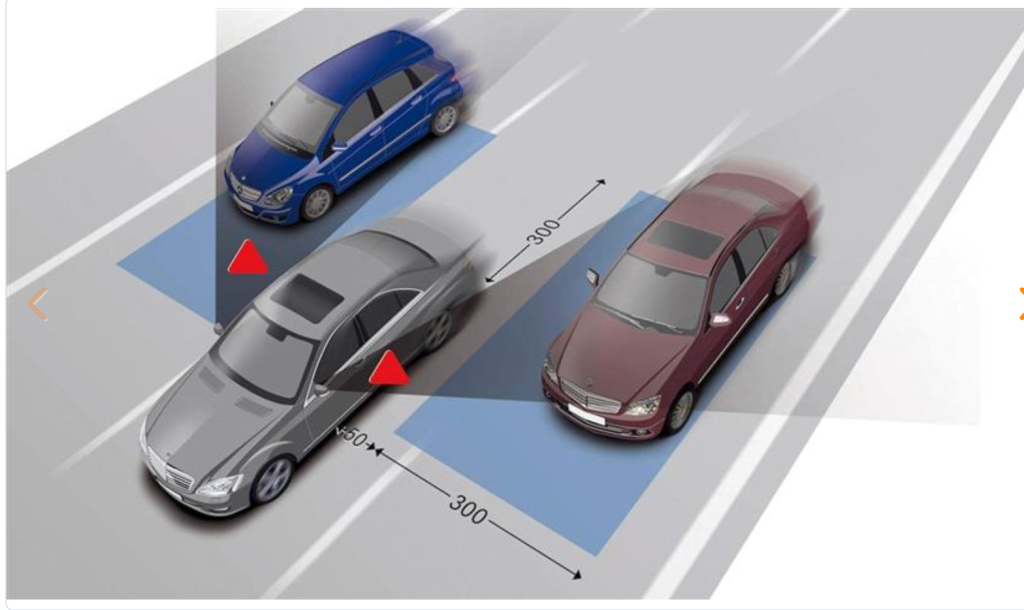
You can adjust your mirrors perfectly and it doesn’t fix the structural problem. There’s always a zone roughly alongside your rear quarter panel, that sliver of space to the side and slightly behind, where mirrors run out of coverage. That’s where lane-change accidents happen. You check, nothing’s there, you move, and something was there the whole time just outside the mirror’s edge. Not because you were careless. Because the mirror couldn’t show you. That is the problem a blind spot camera solves.
The other thing mirrors can’t do is show up on their own. You have to look. A blind spot camera connected to your turn signal just appears when you signal, feed right there, no decision required, no extra glance, just information where you need it at exactly the right moment.
Cameras and Sensors, What’s the Actual Difference?
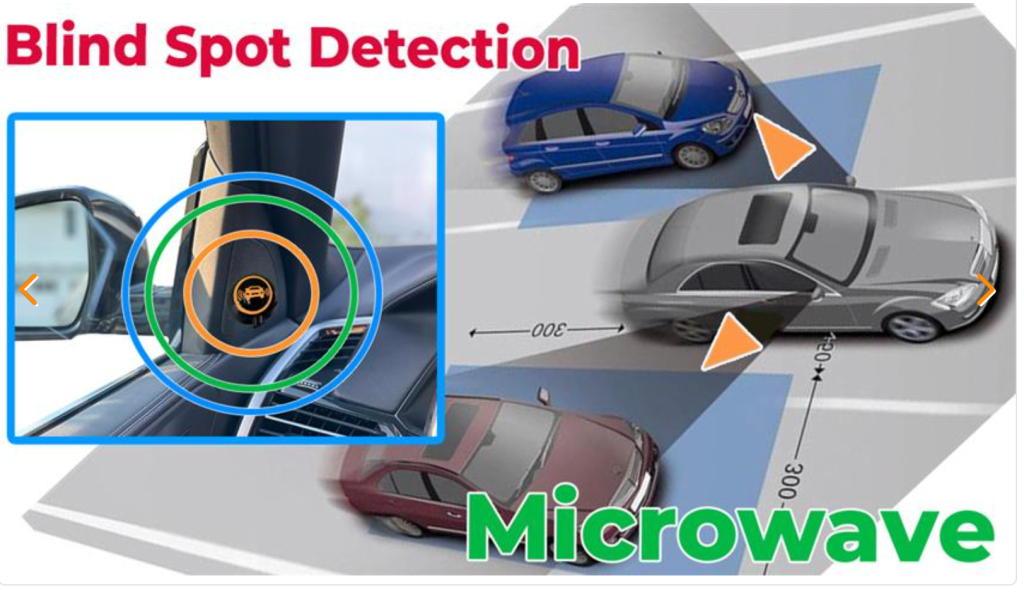
The confusion here is understandable. Both are sold as “blind spot systems.” Both cost similar money at the mid-range. Both detect things in the zone beside your car. But they work completely differently and one of them gives you significantly more.
Radar sensors ping objects and trigger a warning when something’s detected. A light on your mirror, a chime, sometimes a vibration. The problem is that the warning is binary, either something’s there or it isn’t. It doesn’t tell you that what’s there is a motorcycle doing 80 mph. Or a bicycle wobbling slightly into your lane. Or a slow-moving van you’ve already seen and accounted for. Sensors also occasionally miss motorcycles and cyclists entirely because their narrow profile doesn’t return a strong enough radar signal.
Cameras are different because they just show you. You see the object. You see how fast it’s moving relative to your car. You see whether it’s a problem or not. No interpretation required.
Here’s how they stack up directly:
| Blind Spot Camera | Blind Spot Sensor | |
| What you get | Live video of the zone | Alert only (light or sound) |
| Cyclists and motorcycles | Always visible if in frame | Occasionally missed |
| Night performance | Depends on camera quality | Generally consistent |
| Needs a screen | Yes | No |
| Installation | Moderate DIY | Low to moderate |
| Price range | $60 to $600 | $50 to $300 |
Sensors aren’t useless. If you just want a warning light and nothing else, they’re fine. But if you’re spending money on blind spot safety, the version that actually shows you what’s there is the one worth spending it on.
Can You Add One to Your Car?
Almost certainly. The specific setup depends on what your car already has.
No factory screen and no existing safety systems? A universal mirror-mounted or door-mounted kit works on basically anything. They come with their own dedicated monitor that mounts on the dash, wires to the turn signal, and activates automatically. Clean install, no factory integration required.
Modern infotainment screen? There are vehicle-specific integration modules that pipe the camera feed directly to your existing factory screen without replacing the head unit. It ends up looking like a factory feature. The catch is that compatibility is genuinely specific, same brand, same model, sometimes even the same trim year matters. Check before ordering.
Car already has radar-based blind spot sensors? You can still add a camera on top. They run as separate systems. The sensor gives you the alert, the camera gives you the visual confirmation. Some people run both.
Lease vehicle? Door-mounted adhesive systems are the answer. No drilling, no marks, peels off cleanly. It just won’t look quite as integrated as a mirror-mounted setup.
The Blind Spot Detection range at Tadibrothers covers all of these scenarios, worth checking your specific make there before buying anything.
The 5 Systems Explained
1. Mirror-Mounted Camera with Dedicated Monitor
This is the most common blind spot camera setup and usually the right starting point. A small camera clips under your existing side mirror housing, aimed at the zone alongside and slightly behind the vehicle. The cable runs through the door into the cabin and connects to a standalone monitor on the dash. The monitor activates when you signal. That’s the whole system.
What makes it work is that it fits virtually any vehicle without factory integration. No infotainment screen needed. The monitor can show left and right feeds simultaneously in a split view, which is genuinely useful when you’re merging rather than just changing lanes. Installation is a few hours of patient work, no special tools, just trim panels and some wire routing.
When shopping, the camera itself matters more than the monitor. Look for 120-degree field of view minimum, IP67 waterproofing, and low-light performance that’s actually tested rather than just claimed. The monitor should be at least 5 inches. Smaller than that and reading it at a glance while driving is harder than it should be.
Price range: $80 to $250 complete.
2. Vehicle-Specific Mirror Cap
Some manufacturers make replacement mirror caps for specific vehicles, with the camera already built into the housing. Swap the cap, run a single cable through the mirror, done. The camera sits at the factory-correct angle for that exact vehicle geometry. From the outside, the car looks completely stock.
This is the cleanest-looking setup available. No external bracket, no visible camera housing, no monitor that announces itself as an aftermarket add-on. For anyone who cares deeply about how the install looks, or for lease vehicles where you want to leave no trace, it’s the best option.
The downside is availability. These exist for a limited range of makes and models. If your vehicle isn’t supported, this option doesn’t exist for you, full stop. If it is supported, it costs more than a universal setup but delivers noticeably better results on aesthetics and camera alignment.
Price range: $150 to $400.
3. Door-Mounted Shark Fin Camera
This one skips the mirror housing entirely. A small shark fin-shaped camera sticks to the car door with adhesive tape, aimed at the lane beside the vehicle. Cable runs inside through the door seal. Monitor on the dash. Done in under an hour with no tools beyond a pry tool for the door seal.
The obvious appeal is simplicity. No disassembly of anything, no drilling, completely reversible. If you’ve never done automotive wiring and the idea of removing trim panels makes you nervous, this is a genuinely approachable install.
The trade-off is accuracy. Because the camera sits on the door surface rather than under the mirror, the viewing angle isn’t as precise. The zone it captures is slightly different from what a mirror-mounted camera captures, and some drivers spend a while dialing in the angle before they’re happy with it. As an entry point, it’s fine. As the best possible setup, it isn’t.
Price range: $60 to $150 complete.
4. Factory Screen Integration
If you already have a decent factory infotainment display, routing a blind spot camera feed directly to it is a genuinely satisfying result. The feed appears on the screen you already use every day, activated by the turn signal, looking like it was installed at the factory. It’s the same experience Hyundai’s Blind-Spot View Monitor or Honda’s old LaneWatch provided from the factory, but added to vehicles that didn’t come with them.
Getting there requires a vehicle-specific video integration module that sits between the camera and the factory radio. Compatibility is tight. The wrong module for the wrong model year and nothing works. Installation is more involved than a standalone monitor system. But the end result is significantly cleaner than adding a separate screen to a car that already has a good one.
Worth doing if your vehicle is supported. Worth confirming compatibility in detail before buying anything.
Price range: $200 to $600 depending on make and module complexity.
5. Multi-Camera System (Trucks, Vans, and Larger Vehicles)
On a sedan, two side cameras usually cover everything relevant. On a full-size truck, a commercial van, or an RV, the blind zones on all four sides of the vehicle are genuinely large enough to hide other cars, not just motorcycles. A multi-camera system puts cameras front, both sides, and rear, feeding into a monitor that shows a split view or cycles between feeds.
This isn’t a casual install. More cameras, more cable routing, a larger monitor with multiple inputs. If that sounds like too much, a professional installation makes sense and usually runs a few hundred dollars. But for anyone driving a large vehicle in environments where tight maneuvering matters, loading docks, urban deliveries, anything with significant reverse distance, total camera coverage is the difference between knowing and guessing.
The Blind Spot Detection systems at Tadibrothers include configurations built specifically for trucks and larger vehicles where standard two-camera kits fall short.
Price range: $200 to $600 complete.
Night Vision: The Question Everyone Asks
Short answer: it depends entirely on the camera.
The concept works at night, there’s no reason it wouldn’t. A blind spot camera that can see in low light shows you the lane beside you in low light. The problem is that cheap cameras with basic sensors produce grainy, washed-out images once the sun goes down. Usable in a lit parking garage. Less useful on a dark rural highway at 65 mph where you actually need to trust what you’re seeing.
Mid-range cameras handle this one of two ways. Low-light optimized sensors use wider apertures and broader ISO ranges to pull more information from available light. They work well in suburbs with decent streetlighting. On unlit roads, results are inconsistent. Cameras with built-in infrared LEDs take a different approach, they generate their own invisible light source, which the sensor can read even in near-complete darkness. The images come out black and white, not color, but you can see clearly whether something is in the lane beside you, which is the only thing that matters.
If you drive regularly after dark, specifically look for a lux rating of 0.1 or lower in the spec sheet, or IR LEDs listed as a feature. If neither is mentioned, the camera probably struggles at night and the manufacturer knows it.
The Specs Worth Looking At
Most product pages bury what matters under specs that don’t. Here’s the short version:
| Spec | What to Look For |
| Viewing angle | 120 to 140 degrees. Wider than that and judging distances gets harder. |
| Night performance | 0.1 lux or lower, or built-in IR LEDs. No mention means no confidence. |
| Waterproofing | IP67 minimum. The camera is outside. It will get wet. |
| Activation | Turn signal triggered. Manual button systems are distracting at exactly the wrong moment. |
| Monitor size | 5 inches minimum. 7 is more comfortable for split-screen dual views. |
| Resolution | 1080p if you want to read plates at distance. 720p is workable for general lane awareness. |
The activation trigger is the one most buyers underestimate. A system requiring a button press to see the feed is asking you to do something extra at the exact moment you’re focused on a lane change. Turn signal activation means the camera is just there. You barely notice it working, which is exactly how a safety system should feel.
Is It Worth the Money?
That IIHS figure is worth sitting with: 14% fewer lane-change collisions, 23% fewer injuries. Those aren’t marginal improvements. And the systems that produce those results start at $60.
Lane-change accidents don’t happen because people are reckless. They happen because mirrors have structural limits and drivers trust them anyway. You’re not a bad driver. You’re a driver working with incomplete information. A camera like this doesn’t change your driving. It just fills in the information your mirrors can’t give you.
The Blind Spot Detection range at Tadibrothers runs from $60 door-mount kits to full multi-camera setups for large vehicles. The right one comes down to your car, your budget, and how involved an installation you’re comfortable with.
A Few Honest Buying Notes
Check whether a vehicle-specific kit exists for your make before defaulting to a universal system. The install is cleaner and the camera angle is better when it’s designed for your car specifically.
Read blind spot camera reviews about night vision specifically if you drive after dark. Daytime images look good on almost everything. Night is where budget cameras fall apart.
Turn signal activation isn’t guaranteed on every system, some require a manual button press. That detail matters more than it sounds during an actual lane change.
Don’t confuse sensors with cameras when reading product listings. The names are often used interchangeably in marketing. They are not the same product. One shows you a video feed. One beeps.
Factory screen integration kits look amazing when they work. Compatibility is strict. Confirm your make, model, and trim year before ordering.
Mirrors were a massive safety leap when cars first got them. Rear cameras did the same thing for reversing. Blind spot cameras are that same kind of improvement for the zone that mirrors were never designed to cover. The gap exists in every car on the road. The question is whether you want to fill it.
Find the right setup for your vehicle at tadibrothers.com, or go straight to the Blind Spot Detection range to compare systems.
FAQs
1. Do blind spot cameras work at night?
Depends on the camera. Budget sensors go grainy in low light, usable in a lit area, unreliable on a dark highway. Mid-range low-lux cameras do better in suburban driving. Cameras with built-in IR LEDs work in near-complete darkness but produce black-and-white images. Look for a lux rating of 0.1 or lower, or IR LEDs explicitly listed in the specs. If neither is mentioned, night performance is probably the reason why.
2. Can I add one to any car?
Almost any car, yes. Universal kits with dedicated monitors work regardless of what factory systems you have. Vehicle-specific integration kits exist for many popular makes if you want the feed on your factory screen instead. Lease vehicles work best with adhesive door-mounted setups that don’t require drilling or disassembly. Check compatibility for your exact make and model before buying any integration kit.
3. Camera or sensor, which should I get?
Cameras show you the live feed of what’s in the zone. Sensors tell you something’s there without showing you what it is. Sensors occasionally miss cyclists and motorcycles. Cameras don’t, because anything in frame is visible. If you’re spending money on blind spot safety and you have the option of either, the blind spot camera gives you more to work with.
4. What is the blind spot camera price range?
The blind spot camera price varies by system type. Door-mounted kits start at $60 to $150. Mirror-mounted setups with a dedicated monitor run $80 to $250. Vehicle-specific mirror cap replacements cost $150 to $400. Factory screen integration systems go $200 to $600 depending on the vehicle. Multi-camera setups for trucks and vans also run $200 to $600 depending on how many cameras you need.
5. Does my car already have one?
Kia, Hyundai, and Genesis vehicles with a Blind-Spot View Monitor show a live camera feed in the instrument cluster when you signal, that’s a camera. Tesla does the same thing on the central screen. Honda’s LaneWatch did this on older models but has been phased out. Most other brands use radar sensors that only give you a warning light, not a video feed. Check your owner’s manual under “blind spot monitoring” or “lane change assist” to see what your car has.
6. How does it activate?
On a properly installed blind spot camera system, it connects to the turn signal wire during installation. Signal left, left feed appears. Signal right, right feed appears. No buttons. It just works. Some cheaper systems require you to manually activate the monitor each time, which defeats part of the point. Worth confirming before you buy.