
Reversing a trailer is one of those skills that looks impossible until the moment it suddenly isn’t. Most people crack it faster than they expect. The problem is almost never a lack of ability. It’s that the steering works backwards, and nobody explains why in a way that actually sticks.
Turn the wheel left, the trailer goes right. Your brain knows this but your hands don’t believe it, so you overcorrect. The trailer swings harder. You correct it again. And thirty seconds later you’re staring at a jack-knife wondering why anyone thought hitching a second vehicle to the back of yours was a good idea. It happens to almost everyone. It doesn’t have to keep happening.
This covers how to reverse a trailer in five steps, what changes depending on the trailer you’re pulling, how to handle specific situations like driveways and boat ramps, and three drills that build real muscle memory before your first high-stakes reverse. Read it, then go to an empty car park and actually try it.
Why Sometimes the Steering Feels Backwards (And the One Trick That Fixes This)
The hitch point between your vehicle and the trailer is a pivot. When you reverse, your vehicle’s rear axle pushes the trailer’s tongue, which rotates the trailer around that pivot. So when you steer right, your rear axle moves left, which pushes the trailer tongue left, which swings the back of the trailer right. Every instinct you have says turn toward where you want to go. The physics of the situation demands the opposite.
Thinking your way through this in real-time doesn’t work. There’s a physical trick that does. Put your hand at the bottom of the steering wheel, six o’clock, as if you’re gripping it from underneath. Move your hand left, the trailer goes left. Move it right, the trailer goes right. That’s it. The direction of your hand now matches the direction of the trailer, and your brain stops fighting itself. Try it in a car park before you hitch anything up. Once you feel how much easier it makes the inputs, you’ll wonder why it isn’t taught in every driving school.
The 5 Steps
Step 1: Get Out of the Car Before You Start
Walk the area. Seriously. This is the step everyone skips and the one that causes the most problems. Two minutes on foot before you touch the steering wheel tells you things you cannot see from the cab: the drainage channel at the edge of the bay, the concrete post hiding behind the gate, the soft ground that’ll sink the wheel if you go left of the track. Note the obstacles, decide your approach angle, and actually look at where you want the trailer to end up. Now get back in and set up in a straight line with that spot directly behind you.
That straight-line start isn’t always possible in a real situation. But it’s the right starting position when you’re learning because it removes one variable from the equation before you add the difficulty of an angle. Position your vehicle and trailer in line, look in both mirrors so you know how much of the trailer you can see on each side equally, and then move.
Step 2: Pull the Mirrors Out Further Than Feels Right
Your side mirrors are doing all the work now. The rear-view mirror is useless the moment any decent-sized trailer is attached, so stop looking at it. Pull both side mirrors out slightly further than your normal driving position. You’re aiming to see the full length of the trailer on each side, not just the rear corners. More specifically, you want to see the junction point between the trailer and your vehicle, because that angle is what tells you whether things are going wrong before they get dramatic.
Check both mirrors constantly. Not one, then the other. Both. The very common beginner habit of watching the problem side and ignoring the other side is how the trailer gets away from you entirely. You’re watching the left mirror because the trailer started drifting left, and while you’re doing that, the right side is swinging further than you realise.
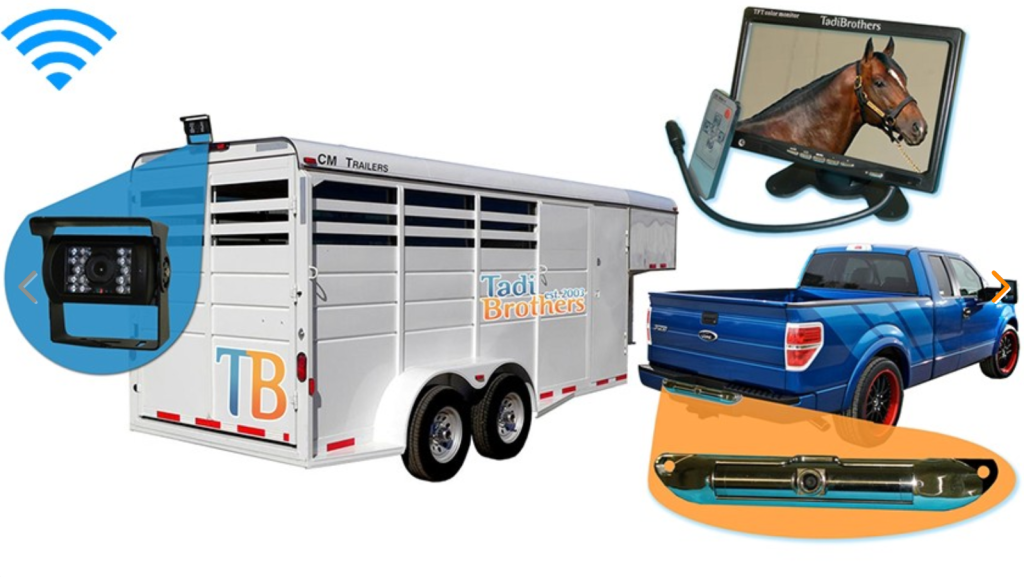
If your standard mirrors don’t cover the full length of the trailer, clip-on tow extenders cost almost nothing and take two minutes to fit. For anything tall enough to block rear visibility completely, a camera matters more than mirrors do. The Parking Sensor Systems at Tadibrothers include options designed for trailer setups specifically, with proximity alerts that work without triggering false alarms from the trailer sitting right behind you.
Step 3: Slower Than You Think, Smaller Than You Think
The single most common mistake is speed. Not dramatic, reckless speed. Just slightly too fast. Slightly too fast means slightly too little time to read what the mirrors are showing and slightly too big a correction needed when you finally act. That correction then requires another correction, slightly bigger, and within four or five seconds you have a jack-knife situation you didn’t see coming.
Go slowly enough that you could get out, walk to the rear of the trailer to check, and get back in without anything having moved meaningfully. That pace feels absurd in a normal situation. That’s exactly the right pace.
Small inputs. When you notice the trailer drifting, one or two inches of hand movement is enough to correct it. The instinct is to turn the wheel significantly because the drift looks significant. Resist that. Move the hand a little, then stop and watch what the mirrors tell you. The trailer will respond. Then you adjust again if needed.
Step 4: Brief Your Spotter Before Anyone Moves
A spotter is genuinely helpful. An unbriefed spotter is the fastest way to make a manageable situation chaotic. Before you move a single metre, establish what the signals mean. Left hand out for left, right hand out for right, both arms up for stop. That’s the minimum. Agree on them. Say them out loud to each other.
Position matters too. The spotter needs to stand somewhere you can see them in the mirror throughout the whole manoeuvre, not just at the start. Best position is on the driver’s side, slightly behind where the trailer will end up, where they can see the trailer’s rear and your driver’s mirror at the same time. Not standing behind the trailer. Not somewhere you can see for the first five metres and then lose. Somewhere you can track continuously.
When the manoeuvre is going, they’re giving calm, ongoing corrections. Not silence until something goes wrong, then shouting. If you lose sight of them, or if their signals stop making sense, stop the vehicle immediately and re-establish before moving again. In noisy environments, a couple of cheap UHF handset radios make this dramatically easier than trying to shout across a windy boat ramp.
Step 5: Pull Forward and Reset. Every Time You Need To.
Pride is genuinely the biggest obstacle at this stage. The angle is getting away from you, the trailer is at an angle you can’t recover cleanly, you know it, but you try one more input to salvage it. That input makes it worse. The next one makes it worse again. And the thing you were trying to avoid becomes the thing you’ve caused.
Pull forward. The trailer straightens itself as you go forward. Reset your approach angle. Try again. There is nothing wrong with a second attempt, or a third. Every professional driver does this. The difference between a professional and a beginner isn’t that professionals never need to reset, it’s that professionals reset before the situation gets difficult, not after it’s already gone wrong.
The early warning sign for a jack-knife is the angle between your vehicle and trailer closing fast on one side of your mirror. When you see that happening, not when it’s finished happening, that’s the moment to stop reversing and pull forward. A jack-knife at 70 degrees is a two-minute reset. A jack-knife at 90 degrees is a potential insurance conversation.
Short Trailers vs Long Trailers: They’re Not the Same
Not all trailers behave the same, and understanding how to reverse a trailer of different types is genuinely a different skill. The physics are identical. The timing isn’t.
Short trailers, boat trailers, small utility trailers, compact box trailers, react to your steering almost immediately. Half an inch of hand movement and the trailer is already going somewhere. This makes them trickier for beginners than long trailers are, which is the opposite of what most people expect. The correction window is tiny. You apply an input, the trailer reacts fast, you need to straighten again fast. Everything happens at a compressed timescale.
Long trailers, large caravans, horse floats, enclosed freight trailers, respond slowly. You apply an input and for a moment nothing seems to happen. Then the trailer starts to turn. The delay catches beginners out because they apply another input thinking the first one didn’t work, and then both inputs hit at roughly the same time and the trailer overcorrects. With a long trailer, apply the input, wait for the response, then adjust.
Tandem axle trailers add more stability but resist turning more. They need wider arcs and more space. Single axle trailers are more nimble but require more active correction. If you’ve learned on one type and switch to the other, give yourself ten minutes in a car park before taking on anything tight.
Boat trailers specifically: most are short, which makes them sensitive. And once the boat’s on board, rear visibility drops to near zero. Mirror extenders or a rear camera move from being nice-to-have to genuinely essential.
Three Situations People Struggle With Most
Reversing Into a Driveway
The challenge with a driveway isn’t the driveway itself. It’s the approach. Come in too sharp an angle and you’ll either catch the gatepost with the trailer or clip the kerb with the tow vehicle as you track through. A wider, more gradual approach gives you a much better angle to work from.
Once you’re reversing in, use the edges of the driveway the same way you’d use lane markings. Check both sides in your mirrors and keep equal space on each side as you go in. The moment one side is noticeably closer to the edge than the other, one small correction in that direction. Then watch and adjust again if needed. If the approach angle looked wrong before you started reversing, fix it first. Not during.
Reversing a Boat Trailer Down a Ramp
Boat ramps have two complications that driveways don’t: a downhill slope and people watching. The slope means your vehicle is on a grade as you manoeuvre, which changes how the brakes respond and how quickly the rig wants to roll. Go even slower than normal and keep your foot covering the brake. The audience is irrelevant. Take the time you need.
Walk the ramp first if you’ve never used this particular one before. Ramp angle, lane width, and the turning space at the top all vary significantly. Get your crew ready before the trailer reaches the water so you’re not trying to manage a reverse and an impatient person yelling from the waterline at the same time.
Reversing Into a Campsite Pitch
Campsite pitches are usually the tightest reversing most people encounter outside of a car park practice session. Trees, power hookup points, neighbouring vans, guy ropes, uneven ground, all in the same ten square metres. Walk the pitch first. Always. Find the power point, check for low branches at the height of the caravan’s roof, test the ground where the wheels will go.
A spotter is more valuable here than almost anywhere else because campsite obstacles tend to be at odd heights and positions that mirrors don’t capture well. Your neighbour’s awning, for example. You won’t see it in a mirror. Your spotter will. If your campsite neighbours are around, they’ve probably watched this dozens of times and are often happy to help guide you in. Take the offer.
What Causes a Jack-Knife and How to Stop It
When the angle between your trailer and vehicle exceeds about 90 degrees, continuing to reverse pushes the trailer sideways rather than backwards. That’s a jack-knife. It doesn’t happen suddenly. It builds progressively through a sequence of overcorrections at too high a speed, and there’s always a point where a clean stop-and-reset would have prevented it.
The specific trigger is almost always one of three things: too much speed, too large a steering input, or correcting too late. Short trailers are especially vulnerable because the progression from “slightly off course” to “jack-knifed” happens much faster. The same inputs that feel reasonable on a long caravan will jack-knife a boat trailer before you’ve had time to react.
Watch for the early sign: the angle between your vehicle and trailer closing rapidly in one mirror while the gap in the other opens. That’s the moment. Stop, go forward, straighten up. Not three more inputs hoping the situation rescues itself.
Three Practice Drills Worth Actually Doing
Reading this article will help. Reading it and then spending an hour in an empty car park will help significantly more. These three drills go from basic to genuinely challenging.
The straight-line. Set up two rows of bottles or cones about three metres apart and twenty metres long. Reverse the trailer between them without touching anything. That’s it. Sounds simple. In the first five attempts, most people touch something. The point is mirror reading and learning what input size produces what results in your specific rig. Do it until you can go straight three times without a correction bigger than one inch of hand movement.
The 90-degree turn. Put a single cone at the apex of a right-angle corner. Reverse the trailer around the cone so it ends up pointing 90 degrees from where it started. Try the right turn first, you can see the trailer’s movement more easily from the driver’s seat, which makes it the less stressful side to learn on. Pull forward and reset as many times as you need to. The goal is getting the trailer around the corner without the angle closing too fast.
The S-curve. A line of cones in a gentle S shape. Reverse the trailer through the curve without clipping any cone. This is the one that teaches you to anticipate rather than react, to see where the trailer is going before it gets there and adjust accordingly. If you can do the S-curve cleanly, you can handle the vast majority of real-world reversing situations without feeling anxious about them.
Things That Actually Help Beyond Technique
Technique does most of the work. But there are a few pieces of equipment worth knowing about, especially if you’re reversing regularly or alone.
Reversing sensors give you audio alerts as you get close to obstacles so you’re not purely relying on mirror judgment in the last few feet where mistakes are most expensive. The parking sensor systems at TadiBrothers include options designed for towing setups that won’t constantly alert because the trailer is sitting right there.
Tow mirror extenders. Genuinely underrated. Standard side mirrors on most vehicles don’t show enough of the trailer when you’re reversing. Clip-on extenders fix this in two minutes for almost nothing.
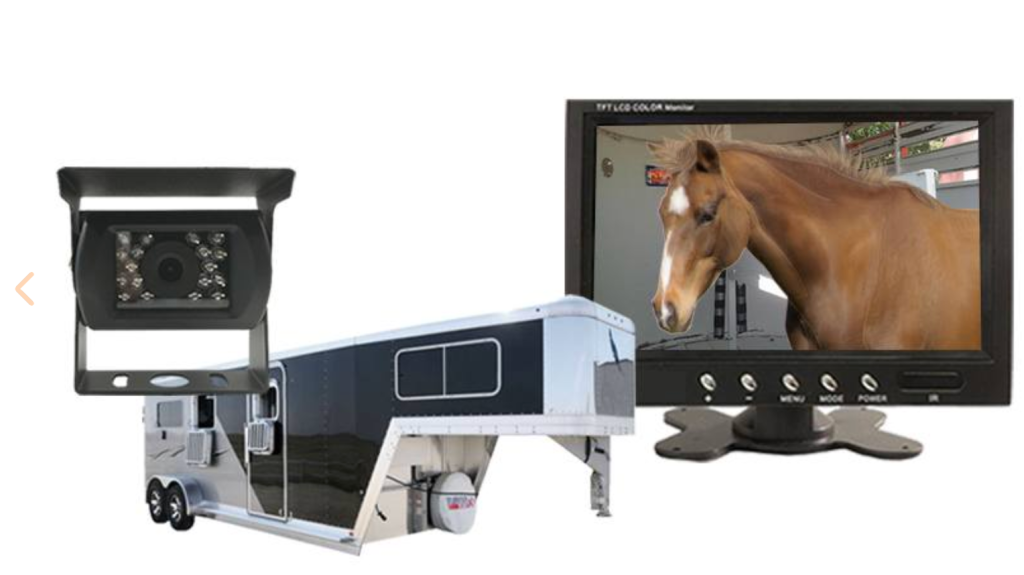
A rear trailer camera on the back of the trailer itself, feeding to a monitor in the cab, shows you what’s directly behind the trailer, the one view no mirror can give you. Worth it for anything with significant height or length that cuts off all rear visibility.
Common Mistakes That Are All Fixable
- Going too fast. This is always the first problem. Slow down further than feels necessary.
- Overcorrecting. One small input, then wait and observe. The trailer will respond. Then you adjust again.
- Watching one mirror. Check both. The side you’re not watching is always where it starts going wrong.
- Not resetting early enough. Pull forward before the situation is difficult. Not after.
- Skipping the walk-around. Two minutes on foot before you start. Always.
- Briefing the spotter insufficiently. Signals agreed before the vehicle moves. Not negotiable.
The hand trick, the mirror discipline, the willingness to reset without drama. Those three things move people from anxious beginner to someone who can back a trailer into a tight spot without their palms sweating. The car park hour costs nothing and saves the embarrassment of learning at a busy boat ramp with a queue of people watching. Most people know this and still skip the practice. Don’t be like most people.
Browse the full range of trailer camera and sensor systems at TadiBrothers.com, or go straight to the parking sensor range if you know what you need.
FAQs
1. Is it hard to reverse a trailer?
At first, yes, mostly because the steering feels backwards and that takes some getting used to. The hand-at-the-bottom trick solves most of that confusion quickly. An hour in a quiet car park before a real trip takes most of the anxiety out of it. After that it’s just practice.
2. Which way do you turn when reversing a trailer?
Opposite to where you want the trailer to go. Wheel right, trailer goes left. Wheel left, trailer goes right. The quick fix: hand at the bottom of the steering wheel. Now move your hand in the direction you want the trailer to travel. It sounds like a cheat. It works perfectly.
3. How do you reverse a trailer without jack-knifing?
Slowly and with small inputs. Jack-knife happens when the angle between your vehicle and trailer exceeds about 90 degrees, almost always because of overcorrection at too much speed. Watch both mirrors for the angle closing fast on one side. That’s your cue to stop and pull forward, not apply another input. Never try to reverse your way out of a developing jack-knife.
4. What is the trick to backing a trailer?
Three things that all matter equally. Hand at the bottom of the wheel so the direction makes sense. Speed slow enough that you have time to actually see what’s happening and make small corrections. And willingness to pull forward and reset rather than trying to rescue a bad angle. Most people learn the first two fast. The third takes a bit of work on the ego.
5. How do you reverse a trailer truck into a loading dock?
Knowing how to reverse a trailer truck correctly starts with the approach angle before you touch the reverse. A slight offset from the dock, left or right depending on which way you need the trailer to swing, sets up the manoeuvre. Small continuous corrections throughout rather than waiting for the trailer to drift and then making a large one. Spotter on a position they can hold for the entire reverse, not just the first part. Most drivers who’ve mastered how to reverse a trailer truck into a dock set up the approach so the last ten metres are as straight as possible.
6. Does trailer length change how you reverse it?
Significantly. Short trailers react fast, small input, immediate response, small window to correct. Long trailers react slowly, you apply an input, wait, then it starts to turn. People who’ve learned one type and switch to the other often get caught out. A short trailer after a long one feels twitchy. A long trailer after a short one feels like it’s ignoring you. Give yourself some car park time whenever you switch.