
Parking sensors work by measuring how close your car is to nearby objects. The closer you get, the louder and faster the warning becomes. Simple idea. Yet most drivers only think about it after hearing that sudden burst of beeping while parking.
You know the moment.
You ease into a tight space. Everything looks fine. Then the car starts complaining. Beep. Beep. Beep.
You stop.
A quick look outside reveals a concrete post sitting much closer than you thought.
That little moment explains why parking sensors became so common.
Years ago, most cars were smaller. Visibility was better too. Today, many SUVs feel like you’re steering a small apartment building through a supermarket parking lot. The vehicles got bigger. The parking spaces didn’t.
That mismatch creates stress.
And stress is usually when mistakes happen.
At Tadibrothers, many drivers start looking at Parking Sensors after a close call. Not necessarily after an accident. Just one of those moments that stays in your head. Maybe you missed a low curb. Maybe a shopping cart appeared out of nowhere. Maybe your garage wall suddenly looked a lot closer than expected.
How Do Parking Sensors Work?
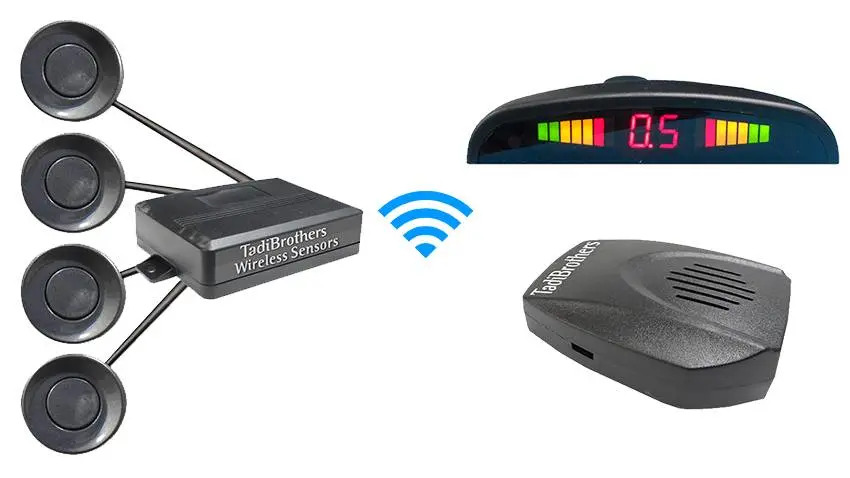
The technology itself is not complicated.
Small sensors sit inside the bumper. They send out signals and wait for them to bounce back. Think of standing in a canyon and hearing your own voice return a second later. The principle is surprisingly similar.
The car keeps checking that distance over and over.
As the gap shrinks, the warnings become more urgent.
If you’ve ever asked yourself, how do parking sensors work on a car?, that’s really the whole idea. The system is constantly measuring the space around you and turning those measurements into warnings your brain can react to quickly.
Most of us don’t even notice how much we rely on those sounds until they disappear.
They Don’t Actually “See” Anything
This catches people off guard.
Parking sensors are not tiny cameras hiding in the bumper. They aren’t looking at the world the way you do.
They simply know that something exists nearby.
What that object actually is remains a mystery.
It could be a wall.
Could be a trash can.
Could be your teenager’s bicycle left in the driveway again.
The sensor doesn’t care.
Its job is distance. Nothing more.
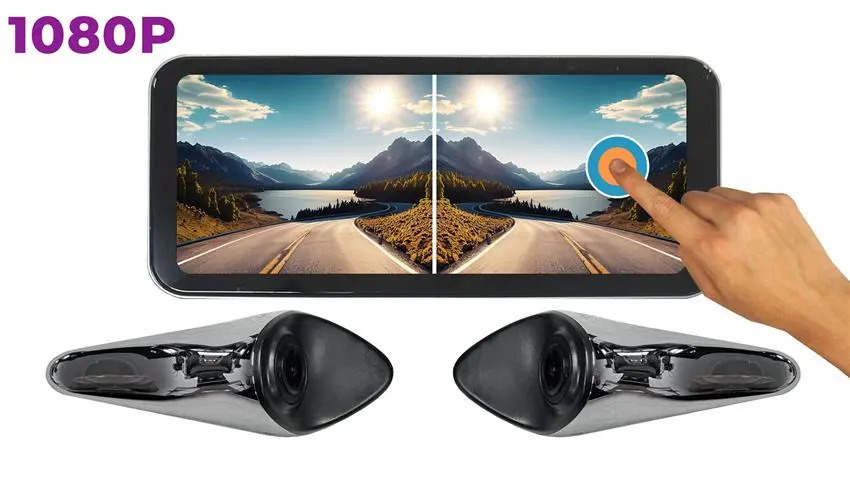
That’s also why sensors and cameras work so well together. One tells you something is there. The other shows you what it is.
The Blind Spot Nobody Talks About
People often assume parking sensors catch everything.
Not quite.
Most work extremely well with large objects. Walls, cars, pillars. Those are easy.
Thin objects can be trickier. A narrow pole. A chain. Certain trailer parts.
Sometimes the thing you’re worried about isn’t the thing the sensor notices first. That’s why experienced drivers still glance around even when the technology is helping. Good habits and good technology tend to work best together.
One shouldn’t replace the other.
Rain Can Make Things Weird
Not broken.
Just weird.
A dirty sensor can act like a grumpy smoke detector. Random alerts. Extra beeping. Strange warnings that seem to come from nowhere.
The first time it happens, many people assume something expensive has failed.
Then they wash the bumper.
Problem solved.
Winter can create the same confusion. Snow builds up. Ice forms around the sensors. The system starts sending mixed messages.
Sometimes the simplest explanation really is the right one.
Parking Sensors vs Backup Cameras
This is not really an either-or decision.
People often compare the two because they seem similar. Out on the road, they feel completely different.
A backup camera shows you the scene.
A sensor measures the space.
Picture backing toward a low concrete barrier. The camera lets you see it. The sensor tells you exactly when you’re getting too close.
Neither system fully replaces the other.
That is one reason many Tadibrothers customers eventually combine Parking Sensors with a backup camera setup. The information feels more complete. You spend less time guessing.
And less guessing usually leads to better parking.
The Funny Thing About Parking Sensors
Most drivers buy them for one reason.
Parallel parking.
Then something unexpected happens.
The feature becomes useful everywhere else.
Gas stations.
School pickup lines.
Parking garages.
Drive-thrus.
The narrow side of your garage you’ve parked beside for ten years.
You stop noticing the system during the easy days. Then one random afternoon it catches something you missed completely.
And suddenly that annoying beeping sounds a lot more helpful than it did yesterday.
FAQs
1. Do parking sensors work when it’s raining?
Usually, yes. Heavy rain, road grime, or ice can sometimes confuse the sensors and trigger extra alerts. In many cases, a quick wipe is all it takes to get things working normally again.
2. Can parking sensors detect curbs?
Most can detect larger curbs, but not every curb is the same. Very low or oddly shaped obstacles can be harder for some systems to pick up consistently.
3. Are parking sensors worth adding to an older vehicle?
For many drivers, they are. Older vehicles often lack modern parking aids, and even a simple sensor system can make tight parking spaces feel much less stressful.
4. Do parking sensors replace a backup camera?
Not really. They do different jobs. Sensors tell you how close something is. A camera helps you see what you’re getting close to.
5. Why do my parking sensors keep beeping when nothing is there?
Dirt, water, ice, or a damaged sensor can all cause false alerts. Sometimes the fix is surprisingly simple. Sometimes one sensor just needs a closer look.