
A backup camera system is one of the most important tools for safe towing. It helps you reverse with confidence, avoid blind spots, and move through tight spaces without stress. As RVs, horse trailers, and fifth wheels keep getting bigger, having a clear view behind your trailer matters more than ever.
We tested wired and wireless systems across real towing situations, campgrounds, highways, rural areas, and crowded parking lots to give you a guide that is simple, accurate, and ready for real use.
You can also explore the newest backup trailer camera systems and replacement parts from trusted brands like TadiBrothers, known for strong hardware, long-range signals, and sharp night vision.
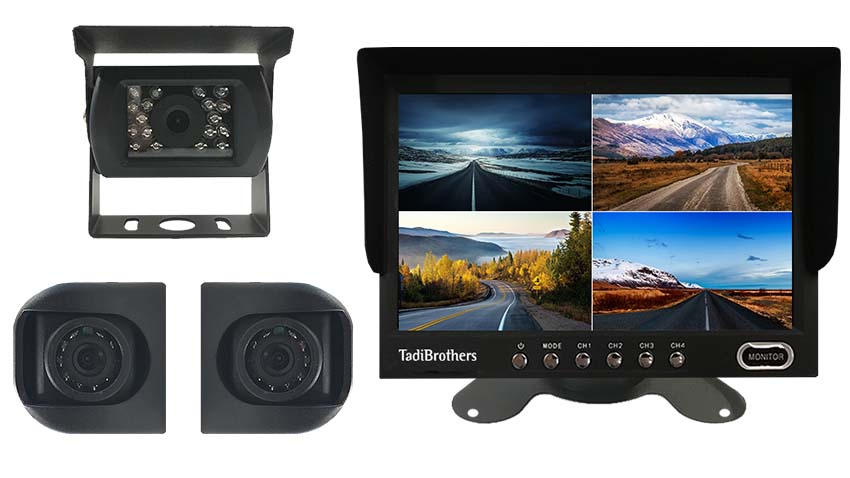
Alt Text – Backup trailer camera system with three wide-angle rear and side cameras connected to a dashboard display monitor for clear towing visibility.
Understanding Why a Backup Trailer Camera Matters
A backup trailer camera clears blind spots by giving you a clear video feed behind your trailer. Today’s systems include HD lenses, wide viewing angles, and strong low-light visibility. They work in rain, dust, fog, and extreme heat, making towing safer and easier wherever you travel.
Both wired and wireless systems offer excellent visibility, but they perform differently depending on trailer size, signal range, and installation style.
Wired Backup Trailer Camera Systems: Strong, Stable, and reliable
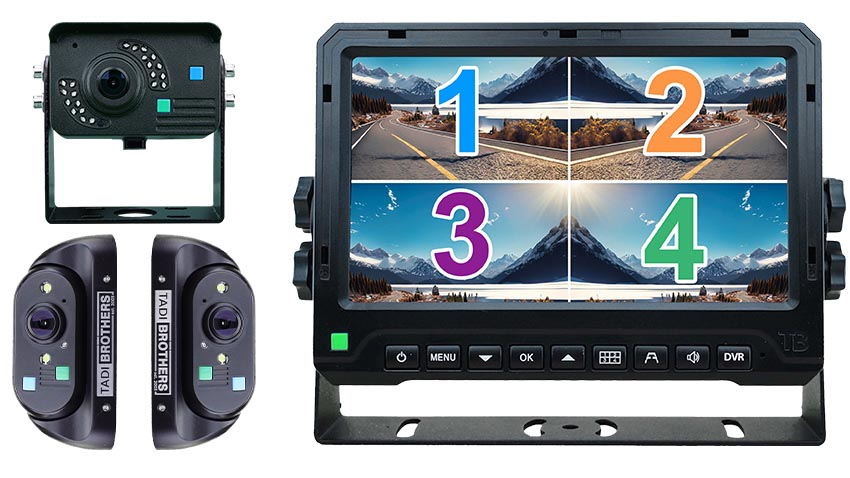
Alt Text: 1080P wired backup trailer camera system for RVs featuring three AHD rear-view cameras and a multi-channel backup monitor
Superior Signal Stability
A wired setup is the most dependable option for long trailers or heavy towing. The camera connects directly to the monitor with a shielded cable, so the signal never breaks, even around metal, traffic, or strong Wi-Fi signals. This gives you a smooth and steady image every time you back up.
Cleaner and More Precise Installation
A wired camera uses one continuous cable that runs from the back of the trailer to the monitor in the cab. Once installed, it provides excellent clarity in bad weather or low light. Most of the wiring stays hidden inside the trailer for a clean, professional look.
Best Suited For:
- Long horse trailers
- RVs and fifth wheels between 35–50 ft
- Metal-frame cargo and utility trailers
- Commercial vehicles and fleet trucks
- Areas with heavy signal interference
If you tow often or cover long distances, a wired camera system for backup trailers gives you unmatched reliability.
Wireless Backup Trailer Camera Systems: Fast Setup & Easy Use
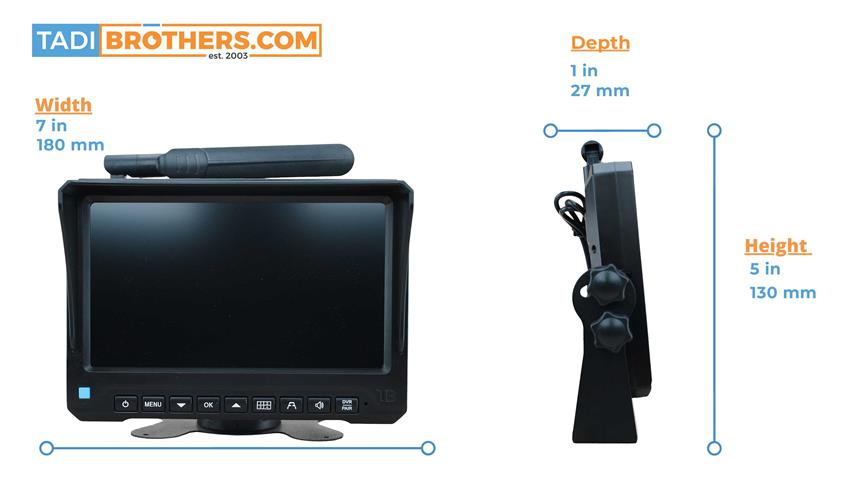
Alt text: 7-inch TadiBrothers backup camera monitor shown from front and side views, displaying its width, height, and depth measurements.
Quick, Simple Installation
Wireless systems are perfect for drivers who want fast setup without dealing with cables. The camera mounts on the trailer, and the monitor pairs with it through a digital signal. Newer models use strong transmitters that work well even at longer ranges.
Great for Switching Between Trailers
If you use more than one trailer, a wireless trailer backup camera is ideal. You can move the camera from one trailer to another in minutes without rerouting cables.
Best Suited For:
- Trailers under 30 ft
- Travel trailers and small utility trailers
- Boat trailers
- Drivers who want DIY installation
- Tow vehicles with multiple power ports
Modern wireless systems now offer HD video, long-range transmission, and impressive signal stability.
Wired vs. Wireless Backup Trailer Cameras
1. Installation
- Wired: More complex; cables must be routed through the trailer. Best left to professionals.
- Wireless: Simple mount-and-pair setup. Great for DIY users.
2. Signal Strength
- Wired: Fully stable and interference-free.
- Wireless: Strong but can weaken around metal or long distances.
3. Video Quality
- Wired: Consistent, high-quality HD video.
- Wireless: Clear HD video but depends on signal power.
4. Durability
- Wired: Very durable once installed.
- Wireless: Durable but depends on transmitter quality.
5. Best For
- Wired: Long trailers, heavy towing, commercial use.
- Wireless: Short trailers, quick installation, multi-trailer setups.
Key Features to Look For in Modern Backup Trailer Cameras
- HD resolution for crisp video
- Night vision with infrared LEDs
- Wide-angle lenses (120°–160°) for more coverage
- Weatherproof housing (IP69K recommended)
- Mobile compatibility for smartphone viewing
- Long-range transmission for wireless systems (150–300 ft)
How to Choose the Right Backup Trailer Camera
For Heavy-Duty or Long Trailers
Choose a wired system for maximum stability and crystal-clear video.
For Quick Setup and Flexibility
A wireless trailer backup camera is perfect for simple installs and straightforward transfers.
For the Best Image Quality
Look for 1080p HD, wide-angle lenses, and strong night vision.
For Harsh Weather
Select rugged cameras with waterproof, dustproof casings and heated lenses.
Professional Installation or DIY?
- Wired systems benefit from professional installers who can hide the cables and set perfect viewing angles.
- Wireless systems are easy to install yourself: mount the camera, power it, pair the monitor, and you’re ready.
For upgrades, replacements, or stronger long-range systems, explore the latest options from TadiBrothers, known for reliable towing technology.
Maintenance Tips for Best Camera Performance
- Clean the lens regularly
- Check wiring or power connections before long trips
- Inspect seals after storms
- Upgrade transmitters or monitors when needed
- Replace worn brackets or mounts
A little maintenance keeps your system clear, stable, and dependable.
Final Thoughts
A backup trailer camera is more than a convenience; it’s a major safety upgrade. Both wired and wireless systems have strong benefits depending on your trailer size, towing needs, and installation preference.
Choose a system with strong construction, HD clarity, and dependable performance, and you’ll tow with confidence in every environment.
For the latest models and replacement parts from cameras to mounts, explore the full collection of backup trailer camera accessories at TadiBrothers.
FAQ: Backup Trailer Camera Systems
1. What is the best type of backup trailer camera for long trailers?
For trailers longer than 30–40 feet, a wired backup trailer camera is the most reliable option. Wired systems deliver a stable signal without interference, making them perfect for RVs, horse trailers, and commercial haulers.
2. Are wireless trailer backup camera systems reliable?
Yes. Modern wireless systems offer strong digital signals, long-range transmission, and 1080p clarity. They work best for shorter trailers, travel trailers, and setups where quick, clean installation is a priority.
3. Can I install a backup trailer camera myself?
Wireless systems are generally DIY-friendly, requiring only mounting, power connection, and monitor pairing. Wired systems are more complex and often benefit from professional installation to ensure hidden cabling, precise alignment, and long-term durability.
4. Do backup trailer cameras work at night?
Most modern systems include infrared LEDs or low-light sensors that provide excellent night visibility. This allows drivers to safely reverse, park, or attach a hitch even in complete darkness.
5. Where can I find replacement parts or upgraded backup camera systems?
You can explore the latest backup trailer camera systems, accessories, and replacements at TadiBrothers, which offers advanced HD cameras, long-range wireless units, and durable weatherproof models designed for all towing conditions.